Shalby Hospitals began its journey as a joint replacement unit 15 years ago. Over 25,000 joint replacements have been successfully performed by the team of doctors. Shalby Hospitals holds the distinction of being the largest joint replacement centre in the world. Now Shalby Hospitals offers over 30 medical super-specialties.
NABH Accreditation puts Shalby Hospitals is in the league of select hospitals to have achieved the national quality bench mark in a record time of 6 months.
Mounting health care costs are a concern for everyone. There are several ways to curtail / manage the same. Most people in your peer, even doctors would recommend one or most of the following:
Healthy & Systematic Eating Habits
Stress Free Living / Effective Stress Management
Regular Exercising / Walking / Weight Training etc.
Regular Health Checks
First 3 options if followed and adhered to are indeed great if adhered to, we all know aren't that easy to follow always. The 4th one if followed religiously on an annual basis will ensure a close check on onset of any disease that may be fatal specially when the age is not on your side.
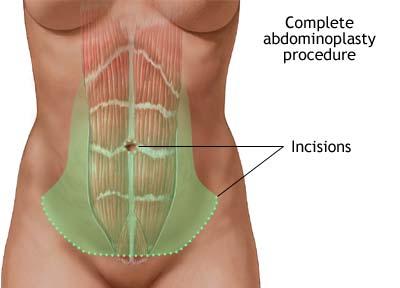
Many times women after child birth and cesarean section operation have stretched their abdominal muscles and skin to such an extent that from where they can not return to normal. The skin and muscles of tummy become lax. Ageing or excess weight loss can create the similar situation. Abdominoplasty, known more commonly as a "tummy tuck," is a major surgical procedure which tightens the abdominal muscles and removes sagging, excess skin and accumulated fatty tissue from the middle and lower abdomen. The procedure can dramatically reduce the appearance of a protruding abdomen and a more defined, flatter, and youthful-looking abdominal region is achieved. As an added benefit of this procedure, the waistline will even become smaller and stretch marks are removed. Liposuction is often combined with tummy tuck. Fat is removed from back, waist and upper abdomen. Mini Tummy Tuck The alternative tummy tuck technique designed to treat problem areas existing below the belly button is referred to as a "mini tummy tuck." This less invasive form of Abdominoplasty is frequently performed on an outpatient basis and typically requires a local form of anesthesia.
How is it performed?
Most commonly, a long incision is made across the hipbone directly above the pubic area, with a second incision following to free the navel from surrounding tissue. The skin will be separated from the abdominal wall up to the ribs, lifting a large skin flap to reveal the vertical muscles in the abdomen. Then the muscles are tightened by pulling them close together and stitching them into their new position. Skin is re-draped and excess skin is excised. New youthful navel is created.
Anesthesia
General or epidural anesthesia for full Abdominoplasty.
Mini tummy tuck can be done under local anesthesia.
Hospital stay
Two to three days.
Mini tummy tuck patient can go home same day.
Recovery
Return to work within two weeks.
You can begin light exercise 2-3 months following surgery.
Risks and side effects
For a tummy tuck, the possible risks include infection, poor healing, skin loss, seroma collection etc. Smoking increases the risk of complications, may delay healing.
Scars
Scars do result from tummy tuck surgery. While the resulting scars may appear to worsen during the first few weeks following a tummy tuck, they should eventually become less discernible. Scar is hidden in the undergarment.
Results
Permanent
If you have any queries or questions write to us atinfo@shalby.orgfor free expert opinion
The number one risk factor for type 2 diabetes is obesity. The National Center for Health Statistics states that 30% of adults are obese. That's 60 million people. Greater weight means a higher risk of insulin resistance, because fat interferes with the body's ability to use insulin. According to the same study, the number of overweight kids has tripled since 1980. The number of children being diagnosed with type 2 diabetes has also risen.
2. Sedentary Lifestyle
The Surgeon General's Report on Physical Activity and Health (USA, 1996) states that "a sedentary lifestyle is damaging to health and bears responsibility for the growing obesity problems." Inactivity and being overweight go hand in hand towards a diagnosis of type 2. Muscle cells have more insulin receptors than fat cells, so a person can decrease insulin resistance by exercising. Being more active also lowers blood sugar levels by helping insulin to be more effective. It's a win-win.
3. Family History and Genetics
It appears that people who have family members who have been diagnosed with type 2 diabetes are at a greater risk for developing it themselves. African Americans, Hispanic-Americans and Native Americans all have a higher than normal rate of type 2 diabetes. Having a genetic disposition towards type 2 is not a guarantee of a diagnosis however. Lifestyle plays an important part in determining who gets diabetes.
4. Increased Age
It's a sad but true fact. The older we get, the greater our risk of type 2 diabetes. Even if an elderly person is thin, they still may be predisposed to getting diabetes. Scientists theorize that the pancreas ages right along with us, and doesn't pump insulin as efficiently as it did when we were younger. Also, as our cells age, they become more resistant to insulin as well.
5. High Blood Pressure and High Cholesterol
These two bad boys are the hallmark risk factors for many diseases and conditions, including type 2 diabetes. Not only do they damage your heart vessels but they are two key components in metabolic syndrome, a cluster of symptoms including obesity, a high fat diet, and lack of exercise. Having metabolic syndrome increases your risk of heart disease, stroke, and diabetes.
6. History of Gestational Diabetes
Gestational diabetes affects about 4% of all pregnant women. It begins when hormones from the placenta make the mother insulin resistant. Many women who have gestational diabetes develop type 2 diabetes years later. Their babies are also at some risk for developing diabetes later in life.
Who wouldn't want a Well-shaped figure! Your body may be de-shaped due to various factors like aging, pregnancy, genetic / hereditary etc. People try hard to shed their extra fat. Some common ways to shed fat are diet restrictions, gym exercises, yoga or body wraps etc. But what most of us are unaware of is the fact that some body fats are resistant, and will never budge what ever one may do. Such type of fats need to be extracted out of the body and that is where Liposuction can help you look shapely.
Liposuction is the most frequently carried out cosmetic procedure in the world. Liposuction by tumescent technique is safe and precise ensuring quick recovery and zero side-effects.
For women, trouble spots tend to be the hips, the thighs, the sides of the knees, the tummy, back rolls and the arms. For men, it's the belly button region, chest and the "love handles" around the hips. Both sexes may also have excesses in the buttocks, neck, cheeks, and chin.
How it Liposuction carried out?
The procedure of liposuction is surprisingly simple. Liposuction is a surgical technique that improves the body's contour by removing excess fat de
posits located between the skin and muscle. Very small incision in inconspicuous site is made on skin. Special fluid (Tumescent fluid) is injected into the fatty area to be dealt with. Few minutes are given for the fluid to act. It loosens and liquefies the fat and makes it bloodless too. Once the fat is liquefied it is sucked out by cannula with the help of syringe or machine from the same incision. Once the fat is sucked out, pressure garment is given to compress treated area, so skin drapes nicely. Large amount of fat can be removed without big cut or scar on body.
The World Alzheimer's Day falls on September 21st of each year and is dedicated to raising awareness about this disease as the most common form of dementia that impairs mental functioning. As of now there is no cure for the disease but considerable progress in medical research has offerd relief by reducing symptoms. Stem cell research is a promising area in medical resea4rch that raises hope for the cure of this diease in coming future.
What is Alzheimer’s disease
Alzheimer’s disease is a brain disorder that leads to impairments in the business of daily living due to memory loss and cognitive changes. It is a degenerative disease which progresses from mild and irregular memory loss to acute neurological disorder. Changes in the neural settings and its degenaration results in the patient being unable to learn, remember or even relate to others.
Who Suffers from Alzheimer's
It is widely acknowledged that more than 25 million people around the globe suffer from Alzheimer's and mostly affects older people over the age of 65. The genetic factor also comes into play as having a parent, brother, or sister with Alzheimer's increases the risk factor of developing the disease. There are also instances of early onset of familial Alzheimer disease but is is rare and only accounts for a small percentage of Alzheimer disease cases.
Symptoms of Alzheimer
Substantial memory loss such with delays in prompt recall, short term, or long term memory
Substantial thinking inadequacy in expressing or comprehending language, figuring out familiar objects, poor coordination, and muscle function
Confusion with time or place
Difficulty in reading judging distance or determining color and contrast confused, suspicious, depressed, fearful or anxious
Treatment of Alzheimer's
Although there is currently no cure for stopping the progression of Alzheimer's there are encouraging advances that include both medications and non-drug approaches to improve symptom management. From the medication point of view cholinesterase inhibitors increase the levels of acetylcholine which postpones the postpones the worsening of symptoms and is most commonly prescribed for mild to moderate Alzheimer's disease . Similarly Mematine is used to regulate glutamate in brain which plays a key role in processing information and is found to effectively delay symptoms in patients. Pleases visit the link for animation on Alzheimer's disease. http://www.healthscout.com/animation/1/7/main.html